Africa Research Institute (ARI) encourages debate, questions orthodoxy and challenges “received wisdom” in and about Africa.

Our publications draw attention to actions and ideas that have worked and advances new thinking where needed. They avoid vagaries and jargon. Arguments and policy recommendations are presented in a straightforward manner comprehensible to all.

We seek to promote an informed, nuanced and representative understanding of the continent.
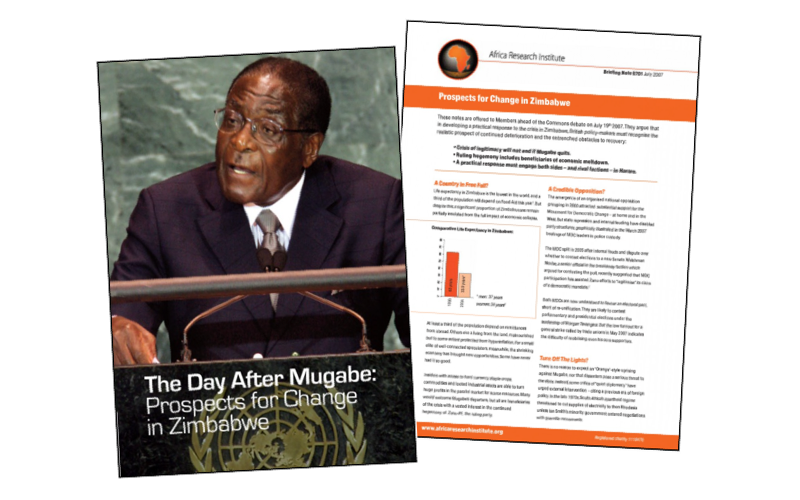
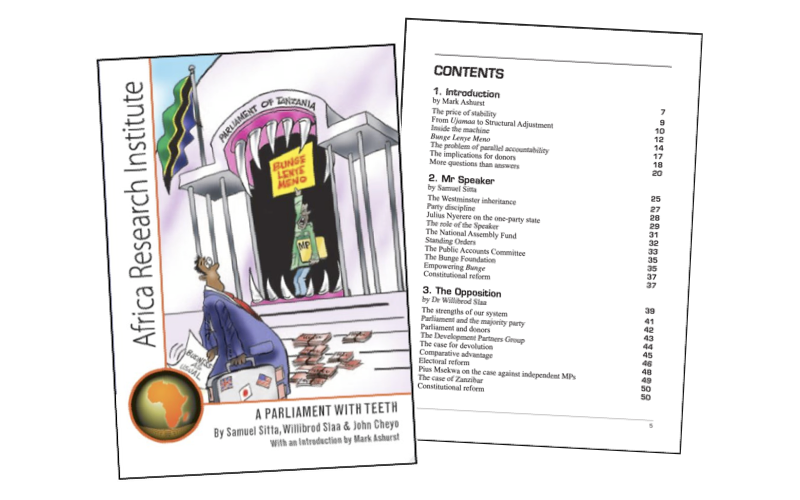
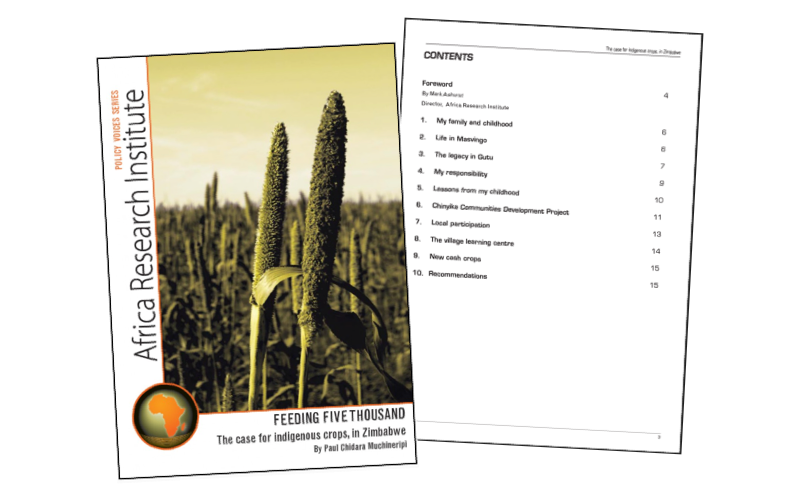
These three early publications exemplify ARI’s approach for the following two decades. Good practice, leadership and innovation were core interests from the outset. The Policy Voice series in particular has focused on practical achievement.

Vagaries and jargon are excised from all publications. Salient conclusions and recommendations are invariably not time-sensitive. They still resonate, encourage or merit discussion today.

The creation of this website in 2026 marks a re-launch of ARI as it approaches two decades in existence.

ARI draws attention to actions and ideas that have worked and advances new thinking where needed

Research and resources

Our researchers identify topics of signal importance across Africa, and the respected experts to approach for guidance or with whom to collaborate. All Policy Voices and most Counterpoints are drafted by external authors. While publications may focus on a particular country, they invariably address matters that transcend national boundaries.

Broadly speaking, most of ARI’s work falls under the following headings: AGRICULTURE, CITIES, HEALTH, LAW AND JUSTICE, ELECTIONS, GOVERNANCE and FINANCE. In the 2020s, DEMOGRAPHY was added: Africa’s population will grow from less than 10% of the global total in 1950 to one quarter by 2050.

Our researchers produce Briefing Notes in-house. They also research and conduct the interviews with prominent figures featured in the Conversations series. The small team has never numbered more than five in all.

ARI’s online election resource between 2015 and 2018 was a novel and unique product providing the network with an expert briefing, usually by a national of the country holding elections, together with an interactive map and a digest of essential election details. The 2017 resource was launched at a ‘State of democracy in Africa’ event.

The election resource was a consequence of ongoing analysis commenced in the 2012 Briefing Note Diehards and democracy: Elites, inequality and institutions in elections.

NIGERIA: HAVE YOUR SAY was another new feature. Nigerians from many walks of life were invited to produce blogs about sub-national government in their state. The series was opened by Cheta Nwanze, arguing that the ‘state of origin’ concept in Nigeria should be done away with.

NIGERIA: HAVE YOUR SAY followed on from State(s) of crisis: sub-national government in Nigeria, an ARI Briefing Note. It was launched at the State of state governments in Nigeria event.

External authors and partners are not remunerated. They contribute their time and enthusiasm freely to work with ARI to bring their knowledge and experience to new audiences who may benefit or learn. ARI is profoundly grateful to them all.

ARI’s research is disseminated widely within Africa and elsewhere to decision-makers, institutions and individuals with a keen interest in the continent’s future.

Reaching readers

In ARI’s first decade, the database grew to more than 10,000 individuals who signed up on the website and received alerts for new publications and blogs. Social media was a boon, enabling us to reach 100,000 followers on Twitter, more than 80% of whom lived or worked in Africa.

On our YouTube channel, in pre-podcast-proliferation days, two items exceeded 10,000 views – singer and songwriter Emmerson Bockarie on ‘Brown envelopes’ in Sierra Leone and Michael Walls on Somaliland’s political transition. Access to many publications and blogs has also been in five figures.

We have held regular interactive events with expert speakers in London and Africa. Among others, ARI has co-hosted events with African Centre for Cities, Nigerian budget transparency organisation BudgIT, the Somaliland International Election Observer Mission and The International Crisis Group.

All ARI material has always been freely available on the website.

Hard copies of publications have been distributed to targeted audiences in Africa when requested by the author. For example, French and English versions of Who will plan Africa’s cities? were despatched to many of the leading urban planning schools. Fr. Anselm Adodo took many thousands of copies of Modern African remedies: Herbal medicine and community development in Nigeria back to Paxherbal’s headquarters in Edo State. The Institute of Economic Affairs (Kenya) circulated How Kenya is failing to create decent jobs, written by its director, Kwame Owino, and two colleagues. Janet Chikaya-Banda’s Duty of care: Constitutional and law reform, in Malawi was launched in Lilongwe and Fouzia Ismail’s Patience and care: Rebuilding nursing and midwifery, in Somaliland was launched in Hargeisa. Nara Monkam and Mick Moore’s How property tax would benefit Africa was shared with tax administrators throughout the continent.

Team

Edward Paice has been Director of Africa Research Institute since 2011.

Edward is a history graduate and former Visiting Fellow (2003-4) of Magdalene College, Cambridge University. In the 1990s and early 2000s he was based in eastern Africa where, among other projects, he wrote the first guidebook to independent Eritrea. Subsequently, he wrote the bestselling “‘Tip and Run’: The Untold Tragedy of the Great War in Africa” (Weidenfeld & Nicholson, 2007). His most recent book, “Youthquake: Why African Demography Matters” (Bloomsbury Publishing, 2021), was widely acclaimed and featured in The New York Times, Financial Times and The Guardian among others. Kwame Owino, CEO of The Institute of Economic Affairs (Kenya), described it as ‘required reading for those interested in Africa’s development’.

Demography, smallholder agriculture, urbanisation and the geo-politics of the Horn of Africa are subjects in which he has a particular research interest.

Advisory Board*

ARI draws on a network of experts within and outside Africa, including members of its advisory board. Advisory Board members have authored publications with ARI and/or provided invaluable ideas, advice and introductions.

We express our sincere gratitude to:

David Anderson

Professor of African History at University of Warwick

Joe Abah

Reforming the public sector in Nigeria (ARI’s 10th anniversary lecture)

Dr Jeffrey Paller

Who Really Governs Urban Ghana

ARI would also like to express thanks to the late Professor Vanessa Watson, co-author of Who will plan Africa’s cities? Vanessa was the catalyst for a series of ARI publications, events and blogs about urbanisation. She introduced us to colleagues at the African Centre for Cities (University of Cape Town) and urban practitioners all over the continent. Her enthusiasm for what ARI seeks to do was immense, her support unwavering and her kindness memorable.

*Names are in alphabetical order. Biographical details recorded in publications may not be current.

There are no permanent positions available at this time.

If you are interested in an internship or work experience at ARI, email your CV to info@africaresearchinstitute.org with a short covering message.

Governance

Africa Research Institute (ARI) is a registered charity in the UK (Charity Number: 1118470) focused on promoting evidence-based research on Africa. It aims to educate and inform on issues of public importance like good governance, urbanisation, health, employment, and rural development. Its research publications are freely available to all.

ARI was founded by Richard Smith in 2007 and has been funded by him since its inception. Richard and his sister, Sue Smith, remained Trustees until retirement in 2026. Richard Smith Richard Smith is also the founder of African Natural History Trust.

The current Trustees are Louise Piper (founder of The Haller Foundation) and Jeremy Evans (co-founder of securities firm Redburn and, following its acquisition by Rothschild & Co, chief executive of The Egmont Trust).

Any party interested in making a financial contribution to ARI’s future work, for example by sponsoring a publication, should in the first instance contact the director – edward@africaresearchinstitute.org