Insights
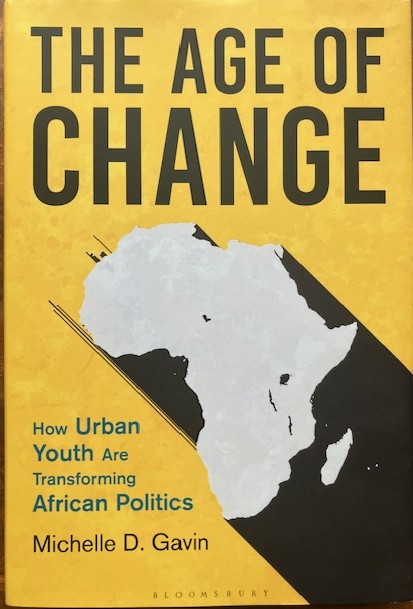
Book review: ‘The Age of Change’ by Michelle D Gavin
Africa Research Institute, Understanding Africa Today 310
310
310
310
 1200
627
310
310
1200
627
310
310
The book opens with ‘Familiar Faces’, expanding on the paradox that although ‘[Africa] is too often associated with political turmoil in the Western popular imagination, [it] has been the site of a great deal of political stasis in recent decades.’ Among the examples surveyed are Equatorial Guinea, Eritrea, Cameroon and Uganda (the ‘forever presidents’); Kenya, Botswana, DRC, Togo, Gabon and Chad (the ‘dynasties’); and the ‘permanent ruling parties’ – South Africa, Zimbabwe, Angola, Mozambique and Tanzania. There is also a category ‘churn without change’ which includes Kenya.
Michelle Gavin, the author, observes that in none of these examples has apparent stability been synonymous with the economic progress that their populations will have wished for; and that the end of stability tends to be marked with ‘increased political contestation and volatility’ akin to ‘opening the floodgates of political demands and ambitions’. Sudan is arguably the most agonising contemporary illustration. Institutions are seldom able to hold the line, although there have been conspicuous cases of election bodies or neutral militaries standing tall and averting crises. Two conclusions are drawn from the survey: that ‘even changes sparked by popular demands do not necessarily lead to democratic outcomes’ (or, I would add, to any improvement in living standards), and that ‘the legacy of long-dominant systems…casts a long shadow’.
All political entities are now subject to change brought by Africa’s mind-boggling, though heterogeneous, demography. This was the focus of my own book Youthquake: Why African Demography Matters, and in the second chapter, ‘Young, Urban, And Connected’ some of the most eye-opening signifiers of the youthfulness of African countries are highlighted. Between 1950 and 2050, Asia’s population will have expanded by almost four times, Latin America’s by a little more than four times, and Africa’s by more than ten times. While some commentators have only recently stumbled upon the youthfulness that accompanies growth of this order – the media age in Uganda and some others is just 16 – this is nothing new. Others who have claimed in the last year or so that fertility is tumbling all over Africa do not appear to have understood the impact on projections of demographic momentum; nor studied in detail exactly where fertility rates are falling slowly, if at all. As the author correctly states, ‘over half of the world’s total population growth through 2050 will happen in sub-Saharan Africa’. By then, almost half of births globally look set to be to African parents. Too little attention is paid in the West to what this demographic bow-wave might influence. The short answer is everything, from geopolitics to migration, from fashion to sport, from global poverty rates to trade.
If the burgeoning number of young men and women is not new, Gavin correctly highlights that the effect of wider education, and the mass availability and use of social media, has been seismic. It is not just the likes of Facebook, TikTok and X that have transformed the communication, exchange of information and mobilisation. Gen Z protestors have also used chatrooms on Discord servers more commonly associated with gaming. They also freely exchange information with protestors on different continents and with their own diaspora. Rapid urbanisation has added concentrated numbers to the mix, although not everywhere: Angola and Burundi are diametric opposites in this regard. Overall, Africa is forecast to have more than half of the world’s 20 largest cities by the end of the century. True or not, Africa’s megacities will be very different, in economic characteristics, function and form to most contemporary examples. The creation of formal or so-called decent jobs will never be able to keep pace with the numbers seeking them; and the consequences of, and reaction to, the dearth of opportunities demanded by educated multitudes are increasingly unpredictable. Platitudes about job creation mouthed at election time and sustained repression are already proving inadequate in some countries – think President Rajoelina’s ousting from Madagascar in October 2025.
Politics everywhere are changing rapidly in ways that we can try to keep track of but will find it difficult to foresee. A massive political force has been unleashed, that much is obvious. Confidence and ingenuity among protest movements are sky-rocketing. At the same time, doors for meaningful participation in political systems are not opening. The cost of entry to formal politics is far beyond the reach of the young. In most countries the youth ‘bulge’ does not bother to vote.
The third chapter, ‘Tired Old Stories’, considers ‘the diminishing potency of established political narratives’ confronted – and often affronted – by the chutzpah of the youth juggernaut. In South Africa, Kenya, Uganda, Angola and elsewhere, the time-worn narratives of political elites are deemed past their sell-by dates. Claims to the right to rule are often anachronistic, increasingly self-interested, and ring hollow to younger ears. In Zimbabwe, ‘the misery overseen by ZANU-PF’ is not disputed, yet the assertion that the party deserves to be in power because of liberation almost five decades ago is still wheeled out. It retains apparent potency in rural areas, and is superficially embraced by some people recognising that ZANU-PF is the only game in town if they want to get ahead, but it is an ‘emperor has no clothes’ narrative. In Kenya, on the other hand, respected campaigning grandee John Githongo remarks that the public pronouncements of his country’s leaders are taken ‘as seriously as a Nollywood thriller…The con has been exposed as a con’. Apathy is less the driver of abstention of young voters from electoral politics altogether than certainty that ‘their’ system is not actually for them at all.
In chapter four, ‘Camouflage Comes Back In Style’, the reaction of one powerful section of society to ineffective government is examined. In West Africa, in particular, the military has taken matters into its own hands. The justifications, real and purported, vary – but there can be no doubting that at one level democracy appears to be on the wane. The putschists often enjoy initial popularity among populations fed up with ‘the ongoing inequality, government and elite self-enrichment’, not to mention precarious security in the face of jihadist threats. The ‘neo-liberal liberation narrative’ is seductive, and ‘[a] radical solution has appeal’. Initial euphoria usually vanishes quickly and momentary delusions wither, leaving an uncertain impasse in their wake – and often even worse living conditions and prospects than before.
The alternative reaction to bad government is ‘Impatient Politics’, street politics, the topic of chapter five. This is where sheer numbers of ‘youth’, some of whom may not be so young, and their concentration in cities can be leveraged to advantage, bolstered by the savviness and connectedness conferred by the digital revolution. As is clear, ‘[m]ass protests can shake governments and force reforms’, especially in countries where military takeover has historically been deemed beyond the pale. The June 2024 protests in Kenya are a good case study. They forced the Ruto government to scrap an unpopular finance bill but were, as the author points out, part of a deeper movement able to deploy lawsuits and other tricks from a sophisticated armoury. Urban youth in Kenya ‘want a change in accountability and a whole new governing class that can plausibly earn their trust, and they continue strategizing about how to get there’. Expectations must remain grounded, and romanticising avoided, but there are better reasons to believe that positive changes may be won over time in Kenya than in, say, Madagascar. The point frequently made by the author, that all protest movements are different and should not be homogenised under the banner ‘Gen Z’ is well made.
So too is the point, covered in chapter six, ‘The Status Quo Strikes Back’, that a standard recourse of embattled leaders is to co-opt youth protestors, and that there are multiple ways that ‘impatient politics’ can be absorbed or deflected. Several presidents have shown no fear of insulting the youth, or of threatening younger generations. The handbook of repression adds pages as rapidly as digital tools develop. There are no quick, permanent fixes for either side. Politics is a continuum and across Africa current trajectories are as fascinating and significant as they have ever been. Meanwhile, young people remain substantially marginalised and denied opportunity. More and more are suspended in the invidious state of ‘waithood’, prevented from attaining milestones that traditionally mark progression to adulthood.
The final chapter considers what political changes mean for ‘The Outsiders’ in an increasingly multipolar world. The US and Europe are depicted as being ‘awkwardly positioned for the era of volatility’. The substantial engagement with African countries of China, Russia, Turkey, UAE and Saudi Arabia provides governments, businesses and even rebel groups with partnership options. Gavin has been involved at the sharp end for two decades, as a US diplomat, senior director for Africa at the National Security Council and now Ralph Bunche Senior Fellow for Africa Policy Studies at the Council on Foreign Relations (CFR). When she states that political dynamics in Africa are ‘profoundly important factors shaping the global future’, and that ‘the way [the US does] business is particularly ill-suited to a region in flux’, her opinion is worth heeding. It applies equally to the UK, Europe and ‘the West’ in general. A good start, she suggests, would be for Africa ‘to move out of the periphery…of policy thinking’. Shrinking (or collapsing, in the case of USAID) aid budgets are both a harbinger and consequence of a new era of relationship-building, for better and worse. The continent’s ‘chronic youthfulness’, to coin a phrase, and ever-growing demographic significance provide opportunities. ‘Young, urban, connected societies are demanding change’ and securing it, even if not to the extent that might be wished. Change needs to be embraced and better understood if ‘traditional’ allies wish to remain relevant.
‘The Age of Change’ is extremely readable, a nuanced summary of a landscape that is well-informed and realistic. A glance at the references shows that leading authorities predominate while also evidencing a beady eye on social media and other sources. Michelle Gavin covers the material deftly, avoiding generalisations and hyperbole. The result is a book that should be required reading for anyone, within or outside the continent, with an interest (personal or professional) in the future of Africa.
Edward Paice